
 Image 1 of 1
July 5th, 1994…. The image of 2Pac appearing to spit toward reporters or photographers has become one of the most discussed and symbolic moments of 1990s hip-hop culture because it captured the tension between artists, the media, and public perception.
It made a loud statement, and that statement: ME AGAINST THE WORLD
The Cultural Significance was even louder:
Defiance against the media narrative. By the mid-1990s, Tupac felt that many media outlets portrayed him as a villain while ignoring the realities of his life and community. The moment symbolized his rejection of what he saw as sensationalism and misrepresentation.
The voice of frustration. To many fans, it represented the anger of a generation that felt unheard, stereotyped, and judged by institutions. Tupac often spoke about poverty, racism, police brutality, and inequality, and moments like this reinforced his image as someone unwilling to remain silent.
Authenticity over image management. Unlike many celebrities who carefully controlled their public appearances, Tupac often displayed raw emotion. That authenticity—whether people agreed with his actions or not—became a major part of his legacy.
A symbol of rebellion. The photograph became an iconic visual in hip-hop history because it embodied resistance, confrontation, and a refusal to conform to expectations. It fit the larger cultural identity of hip-hop as a platform for challenging authority and demanding respect.
The duality of Tupac’s legacy. The image also reflects the contradiction that made Tupac so compelling: he could be thoughtful, poetic, and socially conscious, yet also intensely emotional and confrontational. That complexity continues to fascinate audiences decades later.
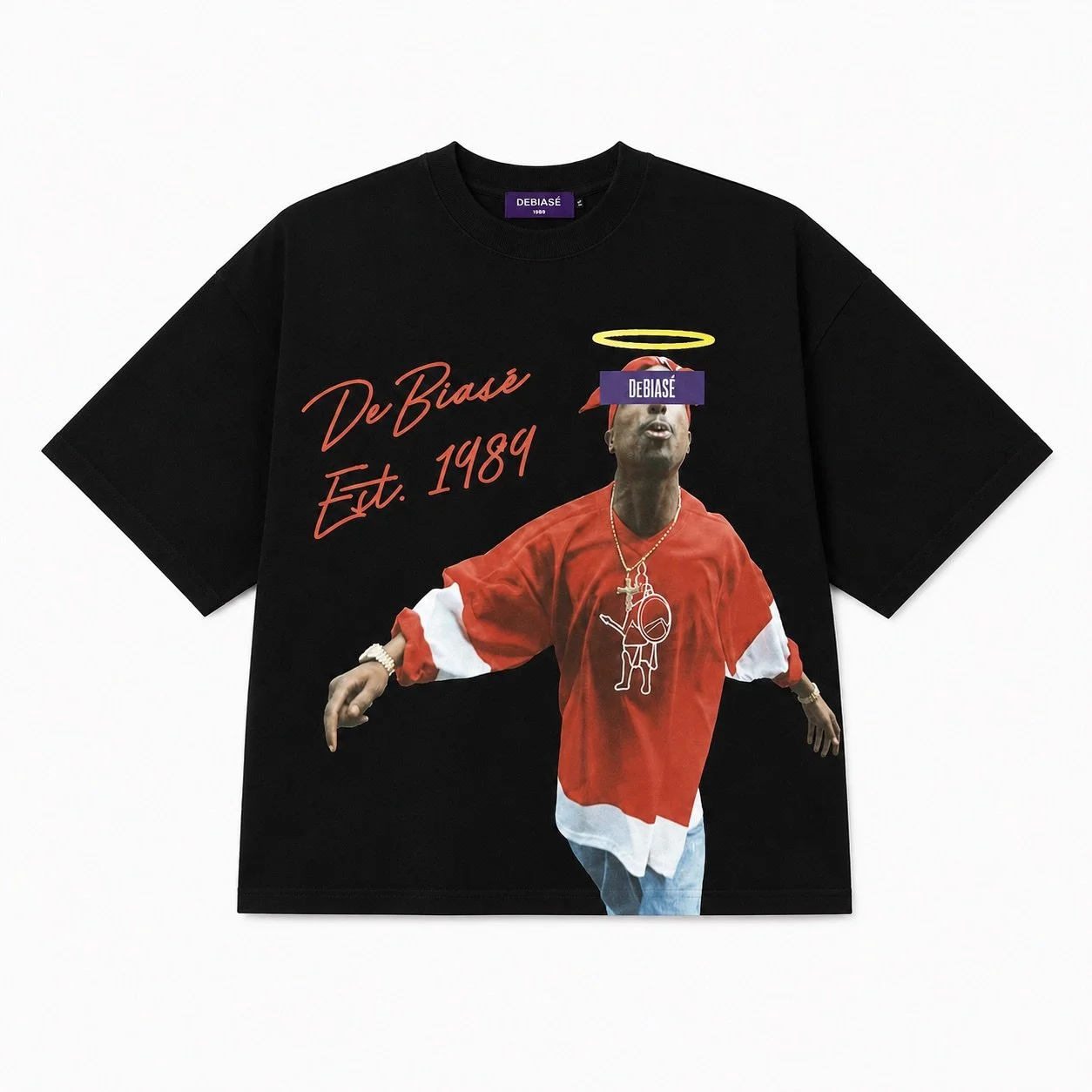
Crafted from premium heavyweight cotton, this oversized boxy-fit T-shirt embodies the signature DEBIASÉ philosophy—where art, heritage, and modern fashion intersect. The striking front graphic reimagines an iconic spirit of rebellion and self-expression through a contemporary luxury lens, complemented by the handwritten DeBiasé Est. 1989 script and the brand’s distinctive visual identity.
Designed with dropped shoulders, a structured silhouette, and an intentionally oversized fit, the piece delivers effortless presence whether styled casually or layered into a more refined wardrobe. Every detail is considered, from the substantial fabric weight to the premium finishing, creating a garment that feels as elevated as it looks.
In a fashion context, this imagery inspired by that moment often represents unapologetic self-expression, resistance to labels, and standing firm in one’s identity—themes that resonate strongly with luxury streetwear brands that celebrate individuality and cultural storytelling.
This is more than a T-shirt. It is a wearable expression of authenticity, confidence, and exclusivity.
Individuality. Authenticity. Exclusivity.
July 5th, 1994…. The image of 2Pac appearing to spit toward reporters or photographers has become one of the most discussed and symbolic moments of 1990s hip-hop culture because it captured the tension between artists, the media, and public perception.
It made a loud statement, and that statement: ME AGAINST THE WORLD
The Cultural Significance was even louder:
Defiance against the media narrative. By the mid-1990s, Tupac felt that many media outlets portrayed him as a villain while ignoring the realities of his life and community. The moment symbolized his rejection of what he saw as sensationalism and misrepresentation.
The voice of frustration. To many fans, it represented the anger of a generation that felt unheard, stereotyped, and judged by institutions. Tupac often spoke about poverty, racism, police brutality, and inequality, and moments like this reinforced his image as someone unwilling to remain silent.
Authenticity over image management. Unlike many celebrities who carefully controlled their public appearances, Tupac often displayed raw emotion. That authenticity—whether people agreed with his actions or not—became a major part of his legacy.
A symbol of rebellion. The photograph became an iconic visual in hip-hop history because it embodied resistance, confrontation, and a refusal to conform to expectations. It fit the larger cultural identity of hip-hop as a platform for challenging authority and demanding respect.
The duality of Tupac’s legacy. The image also reflects the contradiction that made Tupac so compelling: he could be thoughtful, poetic, and socially conscious, yet also intensely emotional and confrontational. That complexity continues to fascinate audiences decades later.
Crafted from premium heavyweight cotton, this oversized boxy-fit T-shirt embodies the signature DEBIASÉ philosophy—where art, heritage, and modern fashion intersect. The striking front graphic reimagines an iconic spirit of rebellion and self-expression through a contemporary luxury lens, complemented by the handwritten DeBiasé Est. 1989 script and the brand’s distinctive visual identity.
Designed with dropped shoulders, a structured silhouette, and an intentionally oversized fit, the piece delivers effortless presence whether styled casually or layered into a more refined wardrobe. Every detail is considered, from the substantial fabric weight to the premium finishing, creating a garment that feels as elevated as it looks.
In a fashion context, this imagery inspired by that moment often represents unapologetic self-expression, resistance to labels, and standing firm in one’s identity—themes that resonate strongly with luxury streetwear brands that celebrate individuality and cultural storytelling.
This is more than a T-shirt. It is a wearable expression of authenticity, confidence, and exclusivity.
Individuality. Authenticity. Exclusivity.